Effective commercial construction communication ensures project success by minimizing delays, reducing rework, and preventing costly disputes through transparent documentation and proactive management. This structured approach maintains alignment between field and office teams across all project phases. It establishes clear roles and standardized channels to keep builds on schedule and within budget.
Misunderstandings on a commercial jobsite often lead to more than just minor frustrations; they result in costly rework, schedule delays, and strained relationships between stakeholders. In the fast paced Utah market, a single missed email or an unrecorded change order can derail a multi million dollar project. Effective communication is not a soft skill. It is a critical project management tool that ensures design intent matches the final build. This article examines why transparency is the backbone of every successful site. You will learn the specific phases of information flow, the essential five Cs of construction dialogue, and the modern management tools that bridge the gap between the field and the office. By the end, you will understand how we leverage proactive reporting to build lasting trust through every stage of development.
Why Communication is the Most Important Tool on a Commercial Jobsite
In the complex world of commercial building, many prioritize the quality of the concrete or the gauge of the steel. However, commercial construction communication is the true lifeblood of any project. While excavators and scaffolding are the visible components on a site in Box Elder County, communication serves as the invisible framework holding the entire structure together. Without it, even the most skilled trades can succumb to the weight of avoidable delays and budget overruns.
Anders Construction treats communication as a core service rather than a side effect of project management. In the broader Utah construction landscape, where logistics can be complicated by geography and rapid growth, clear dialogue is what prevents assumption-based building. We integrate expert construction management to ensure that every stakeholder, from the site supervisor to the business owner, is operating from the same set of facts.
This proactive approach turns potential friction into a streamlined workflow, ensuring that residential and commercial construction services are delivered with precision and long-term value. By establishing this invisible framework early, we protect the project from the chaotic ripple effects of silence or misinformation. When information flows freely, we can address structural or logistical challenges before they become expensive mistakes.
The High Cost of Silence: What Happens When Communication Breaks Down

Silence on a jobsite is rarely golden; usually, it is the sound of a looming budget crisis. When commercial construction communication fails, the gaps are quickly filled by guesses. This practice, known as assumption-based building, is a primary driver of construction litigation and one of the most significant risks to a project’s financial health. For a small-to-mid-sized business owner in Utah, these errors do not just cause minor delays. They can result in a 20 percent spike in costs that the initial capital plan simply cannot absorb.
Consider a scenario involving a foundation pour for a new retail space in Box Elder County. If the structural engineer issues a revision to the reinforcement steel specifications but the update never reaches the field supervisor, the crew may proceed with the original plan. Once the concrete is poured and cured, an inspector identifies the discrepancy. The resulting rework involves jackhammering out cured concrete, disposing of debris, and repurchasing materials. This mistake effectively doubles the cost of the foundation and pushes the occupancy date back by weeks.
Beyond the physical rework, poor communication breeds scope creep and safety hazards. When roles are undefined or changes are not documented, subcontractors may perform work that falls outside the original contract, leading to disputes during the billing cycle. Safety also suffers; a lack of clear coordination regarding heavy equipment movements or utility shut-offs can lead to site accidents that are entirely preventable.
For Utah developers and business owners, these financial hits are often avoidable through expert construction management. By prioritizing proactive dialogue, Anders Construction ensures that every team member is working from the most current set of documents. We recognize that for a local business, the difference between a successful expansion and a financial burden often comes down to the quality of information shared before the first shovel hits the dirt.
Phase by Phase: How Information Flows from Site Prep to Handover

Effective commercial construction communication evolves as a project moves from initial site prep to the final handover. Each phase demands a different type of information exchange to keep the project on track and the client informed.
In the pre-construction phase, communication centers on alignment and feasibility. This is when we dive into the specifics of local permitting in Box Elder County and discuss how Northern Utah’s unique ground conditions, such as high clay content or rocky soil, might impact the initial excavation. Proactive dialogue during this stage ensures that expectations regarding budget and timelines are realistic before a single machine arrives on-site.
As the project moves into the active build, the focus shifts to the vital link between the field and the office. This is where expert construction management becomes visible. On-site supervisors must relay daily progress and any unforeseen site conditions to the project manager, who then synthesizes this data for the owner. In Utah, winter weather is a constant variable. Proactive updates regarding a heavy snowfall or a week of sub-freezing temperatures are essential for managing schedule shifts. If a concrete pour must be rescheduled due to temperature drops, the client should know the contingency plan immediately, not after the deadline has already passed.
Project Phase | Primary Communication Focus | Key Deliverables and Action Items |
|---|---|---|
Pre-Construction | Expectations and Permitting | Site surveys, permit approvals, initial schedule |
Active Build | Field-to-Office Sync | Daily logs, safety reports, weather-related updates |
Post-Construction | Close-out and Education | Maintenance manuals, warranties, final walk-through |
The final phase, post-construction and handover, is often where communication gaps occur, yet it is critical for long-term value. A successful handover involves providing the owner with clear maintenance manuals, warranties, and close-out documents. It is not enough to simply hand over the keys; we ensure the client understands how to maintain their new facility’s systems. For those seeking reliable residential and commercial construction services, this structured information flow provides the transparency needed to feel confident throughout the entire building process.
The 5 Cs of Effective Construction Communication

To implement effective commercial construction communication, industry professionals often rely on the 5 Cs. Adapting these principles to the Utah jobsite ensures that information moves as efficiently as the heavy machinery.
Clear: Every communication must have a single, unambiguous purpose. Instead of telling a subcontractor to "tighten up the schedule," a clear directive specifies that the framing must be inspection-ready by Thursday at noon. This eliminates the guesswork that leads to project drift.
Concise: Jobsite brevity saves money. A concise RFI (Request for Information) that highlights only the specific conflict in the architectural drawings allows a structural engineer to provide a solution quickly. Reducing the word count in technical queries can often save three days of waiting for an engineering response.
Concrete: Avoid abstract descriptions. Being concrete means providing exact measurements, GPS coordinates for site work, or high-resolution, time-stamped photos of a structural issue. Specificity prevents the assumption-based building that causes errors.
Correct: Information is only useful if it is accurate. Ensuring that technical specifications, such as the specific PSI for a slab pour in Box Elder County, are correct before they reach the field is a hallmark of expert construction management.
Coherent: All project data should follow a logical flow. If a change order is issued, it must be coherently linked to the original contract and the relevant daily logs. This ensures that when providing residential and commercial construction services, every stakeholder can trace the reasoning behind every decision.
This structured approach prevents the fragmented messaging that often plagues complex builds. By applying these five standards, project managers can transform a chaotic flow of emails and phone calls into a streamlined, actionable record of progress.
Essential Management Techniques and Modern Tools
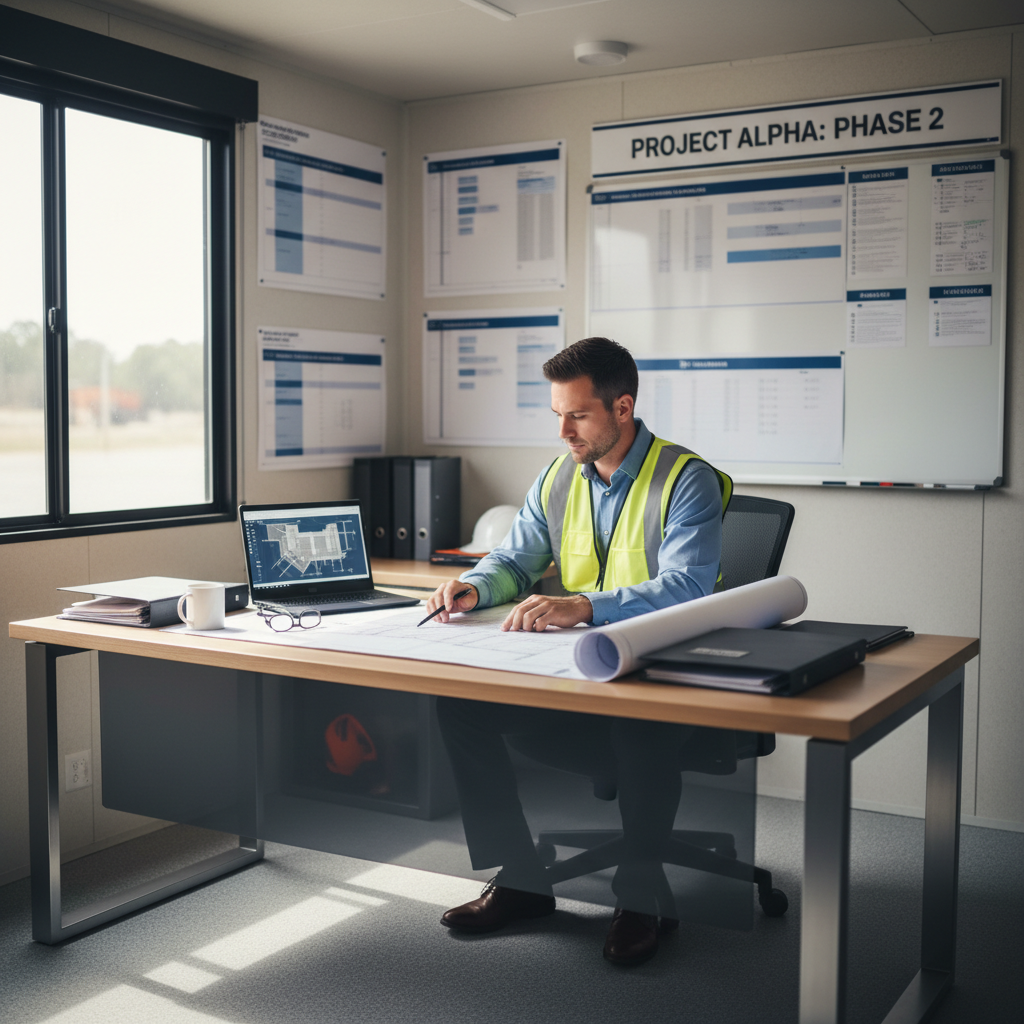
Applying the 5 Cs requires more than just intent; it requires a specific toolkit designed for the Utah jobsite. At Anders Construction, we utilize daily stand-up meetings to ensure every trade partner knows the day's goals and safety protocols before work begins. These brief, high-impact huddles are essential for identifying immediate obstacles, such as equipment arrival delays or utility shut-off timings.
We pair these verbal check-ins with digital project management platforms that centralize documentation, RFIs, and photos. This blend of expert construction management allows us to track progress in real-time, providing a single source of truth that prevents data silos. However, digital tracking has its limits. Even the most advanced software cannot replace the value of a face-to-face site walkthrough.
Our supervisors conduct physical inspections to catch nuanced structural issues, such as subtle misalignments in framing or plumbing clearances, that might be missed in a static photo. While modern tools provide the data, traditional boots on the ground oversight provides the context. This dual-layered approach strengthens commercial construction communication by ensuring that data-driven insights are always verified by human experience. By balancing tech with physical presence, we ensure our residential and commercial construction services deliver the long-term value expected in Box Elder County.
Building Trust Through Transparent Reporting
In the construction industry, silence from a contractor often masks underlying issues. Transparent reporting transforms the relationship between a builder and a business owner from a source of stress into a genuine partnership. A client should expect a structured rhythm of updates that provides a window into the jobsite without requiring them to be physically present. This includes weekly logs that detail completed tasks, upcoming milestones, and a clear view of budget tracking against actual expenditures. Visual updates, such as time-stamped site photos, provide a tangible sense of progress that written reports alone cannot convey.
The philosophy that "no news is good news" has no place in commercial construction communication. Providing honest updates even when challenges arise is the only way to maintain a project's integrity. If a supply chain disruption or a sudden shift in Utah weather impacts the schedule, the contingency plan must be shared immediately. Expert construction management requires showing the full picture; hiding a problem only compounds its cost over time.
By maintaining this level of transparency, we protect the project’s long-term value and foster the trust required for successful residential and commercial construction services across Box Elder County. If you are planning your next project and value a builder who prioritizes clarity, contact Anders Construction to discuss how we can bring your vision to life with professional oversight.
Success in Utah commercial construction ultimately depends on a foundation of clear, consistent dialogue between all parties. By prioritizing transparency, you can avoid costly delays and ensure your final structure aligns perfectly with your original vision. If you want expert help managing these complex communications, you can read more about how we prioritize client relationships throughout the building process. We would love to help you navigate your next project with the clarity and professional oversight it deserves.